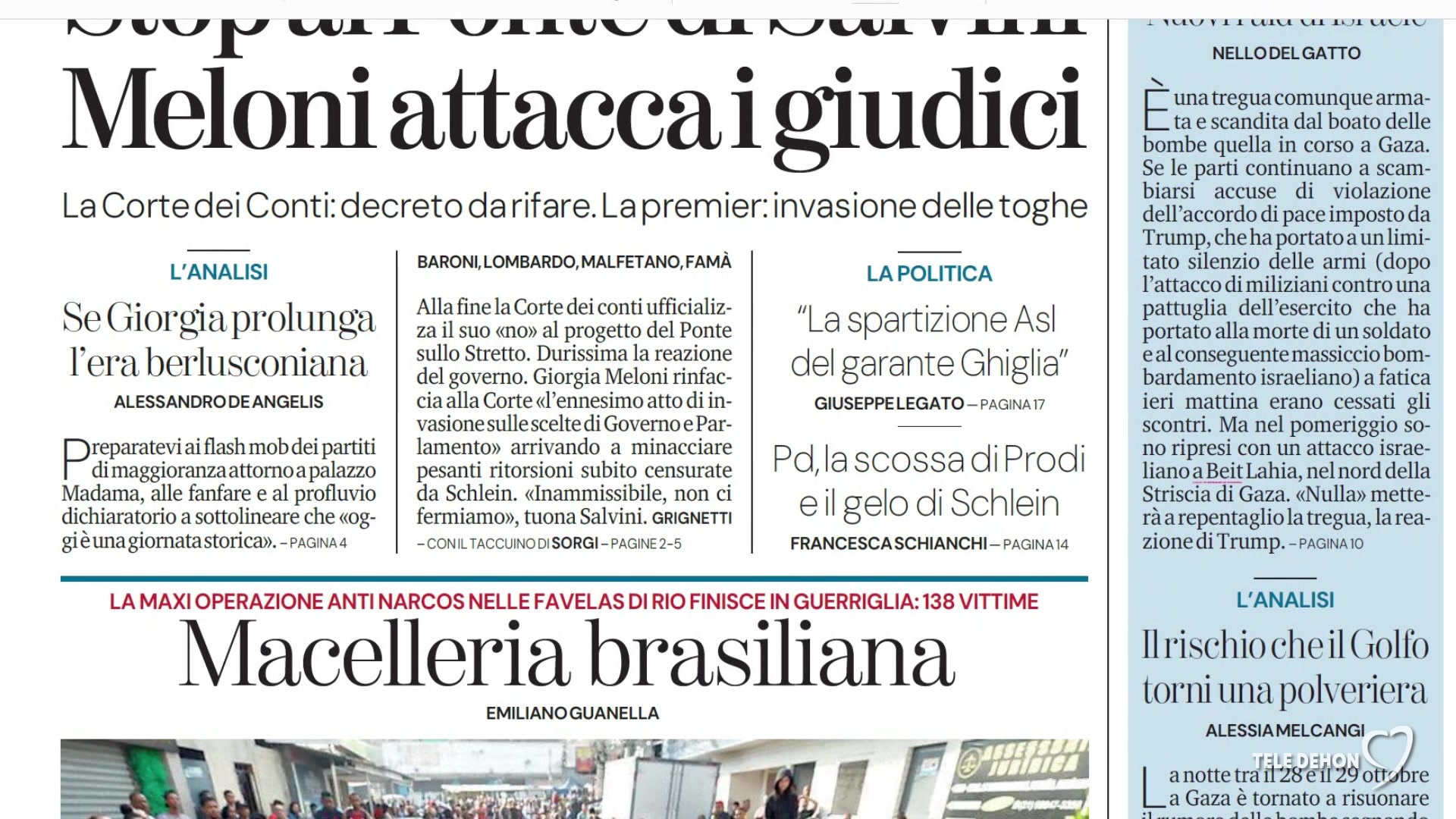
The Messina Bridge Debate: A Political Tug-of-War in Today's Press
The idea of a bridge spanning the Strait of Messina, connecting Sicily to mainland Italy, has been a recurring dream and a persistent point of contention for decades, if not centuries. More than just an engineering marvel, the proposed Messina Bridge has become a powerful symbol, a political battleground, and a consistent feature in the Italian media landscape. Understanding the complex interplay of politics, economics, and public opinion surrounding this ambitious project requires a close look at the
rassegna stampa Messina – the daily press review that captures the latest clashes, investigations, and pronouncements from various political factions. This article delves into the political currents driving the debate, particularly focusing on the dynamic between the Lega and the Democratic Party (PD), as reflected in the modern press.
The Enduring Saga of the Messina Bridge: A National Icon of Contention
The Strait of Messina, a narrow waterway separating Sicily from Calabria, presents both a geographical challenge and an immense opportunity. For decades, the vision of a fixed link, predominantly a suspension bridge, has captivated engineers, politicians, and the public alike. Proponents argue that the bridge would unlock significant economic potential for Southern Italy, stimulate tourism, create jobs, and finally integrate Sicily fully into the national and European transport network. They envision reduced travel times, improved logistics, and a symbolic gesture of national unity. It's often framed as a crucial piece of infrastructure necessary for Italy's modernization and a testament to its engineering prowess.
However, the project is equally, if not more, characterized by fierce opposition. Critics raise a multitude of concerns:
- Seismic Risk: The Strait of Messina is one of Italy's most seismically active zones, lying at the junction of tectonic plates. Building a structure of this magnitude in such an area presents unprecedented engineering challenges and safety concerns.
- Environmental Impact: The area is home to unique marine ecosystems and migratory bird routes. Opponents fear the bridge's construction and subsequent traffic would devastate these natural habitats.
- Astronomical Costs: Estimates for the bridge's construction have varied wildly, often reaching tens of billions of euros. Critics argue that these funds could be better allocated to urgent improvements in existing infrastructure, healthcare, education, or addressing poverty in the South.
- Organized Crime: There are persistent fears that mega-projects of this scale could attract the interest and infiltration of organized crime, leading to corruption and inflated costs.
This dichotomy of hope and skepticism forms the bedrock of the ongoing debate, and it is precisely this tension that fuels the political clashes we observe in the daily
rassegna stampa Messina. Each argument, pro or con, finds its champions and detractors within the Italian political spectrum, making the bridge much more than just a construction project; it's a litmus test for differing visions of Italy's future.
Political Fault Lines: Lega vs. PD in the Spotlight of the Rassegna Stampa Messina
The political discourse surrounding the Messina Bridge is consistently fraught with partisan leanings, and the current dynamic often sees the right-wing Lega party championing its construction, while the center-left Democratic Party (PD) expresses significant reservations or outright opposition. This is not a new phenomenon, but rather a pattern that has emerged over successive governments and electoral cycles.
The Lega, under leaders like Matteo Salvini, frequently positions itself as the party of action, emphasizing infrastructure development as a cornerstone of economic growth and national pride. For them, the Messina Bridge is often presented as a symbol of Italy's ambition, a project that can finally 'unblock' the South and demonstrate the nation's capacity to deliver major works. Their rhetoric often focuses on the benefits to connectivity, job creation, and the reduction of regional disparities. When the Lega "attacks" the PD regarding the bridge, as suggested by the reference context "Lega attacca il Pd" (Lega attacks the PD), it often centers on accusations of being obstructionist, lacking vision, or being out of touch with the needs of southern Italians for development. They might argue that the PD's hesitation is delaying progress and perpetuating Italy's infrastructural shortcomings. This pro-bridge stance aligns with a broader Lega platform of strong leadership and tangible results.
Conversely, the Democratic Party's position tends to be more nuanced and often critical. While not always rejecting the idea outright, their concerns typically revolve around fiscal responsibility, environmental sustainability, and the prioritization of existing needs. The PD often emphasizes that funds should be directed towards maintaining and upgrading current infrastructure (roads, railways, hospitals) that are often in dire need of repair, particularly in the South. They highlight the potential environmental damage, the significant seismic risks, and the colossal financial outlay. An "inchiesta sul Ponte di Messina" (investigation into the Messina Bridge) could, for the PD, signify a necessary scrutiny into financial viability, procurement transparency, or environmental impact assessments, potentially revealing vulnerabilities in the project's planning or execution. For an in-depth look at this specific dynamic, readers might explore
Messina Bridge Investigation: Lega vs Pd in Press Review. This clash reflects fundamental ideological differences: one side prioritizes grand projects and national ambition, while the other leans towards prudence, sustainability, and social equity.
Decoding the Press: How Media Shapes Public Perception of the Messina Bridge
The role of the media in shaping public and political discourse around the Messina Bridge cannot be overstated. The
rassegna stampa Messina is not merely a collection of headlines; it's a dynamic tapestry reflecting diverse editorial lines, political affiliations, and public sentiments. Different newspapers and news outlets approach the topic from distinct angles, often echoing the viewpoints of their target demographics or political sympathies.
For instance, business-oriented newspapers might focus on the economic benefits, job creation forecasts, and potential returns on investment, often presenting an optimistic view aligned with the Lega's pro-development stance. Conversely, left-leaning or environmental publications might amplify concerns about ecological destruction, seismic safety, and potential corruption, often aligning with the PD's cautionary approach. Regional newspapers in Sicily and Calabria play a particularly crucial role, as the bridge would directly impact their communities. Their coverage often reflects local anxieties and aspirations, which can be diverse and contradictory.
The language used, the experts quoted, and the data emphasized all contribute to how the public perceives the bridge. When an "inchiesta" is announced, the media dissects its implications, speculating on its origins and potential outcomes. Headlines can be sensationalist or measured, leading to varying public reactions. It's through this constant media churn that the bridge remains a live issue, constantly debated, analyzed, and often politicized. For a deeper dive into how this controversy unfolds in the media, see
Rassegna Stampa Messina: Unpacking the Bridge Controversy.
Beyond the Headlines: The Stakes and Future of the Messina Bridge Project
The debate surrounding the Messina Bridge carries significant stakes that extend far beyond a mere infrastructure project. For Southern Italy, it represents a crucial decision about development strategy. Will the region benefit more from a single, massive project, or from a broader, more distributed investment in existing infrastructure and social services? For Italy as a whole, the bridge symbolizes its capacity for grand projects, its commitment to national integration, and its ability to manage complex, costly endeavors. The success or failure of such a project could have lasting implications for future mega-projects and Italy's reputation on the international stage.
The future of the Messina Bridge project remains uncertain, perpetually subject to shifts in government, economic conditions, and public opinion. Key factors that will determine its fate include:
- Political Will: The project's advancement is heavily reliant on the political party in power and their commitment to its realization.
- Economic Feasibility: The ability to secure adequate funding, potentially from the EU or private investors, will be critical.
- Public Acceptance: Ongoing public debate, protests, and referendums can significantly sway political decisions.
- Environmental and Seismic Assessments: Rigorous, transparent, and independent studies will be essential to address lingering concerns.
For readers seeking to navigate this complex discussion, a critical approach to information is paramount.
Practical Tip: Always consult multiple sources across the political spectrum when consuming news about the Messina Bridge. Look beyond sensational headlines to read the full articles, scrutinize the data presented, and consider the potential biases of the reporting outlet. Seek out reports from non-partisan engineering or environmental bodies. Understanding the political motivations behind certain statements, whether from the Lega or the PD, helps in forming a balanced perspective on this enduring national debate.
Conclusion
The Messina Bridge debate is a microcosm of Italy's broader challenges and aspirations, perfectly encapsulated within the daily
rassegna stampa Messina. It's a grand vision clashing with practical realities, economic ambitions confronting environmental concerns, and political ideologies battling for dominance. The ongoing "inchiesta" and the pointed "Lega attacca il Pd" illustrate that this is far from a purely technical or economic discussion; it is deeply entrenched in Italy's political identity. As long as the Strait of Messina remains unbridged, the political clashes, the media scrutiny, and the passionate public discourse surrounding this monumental project will continue to be a defining feature of Italy's dynamic political landscape.